

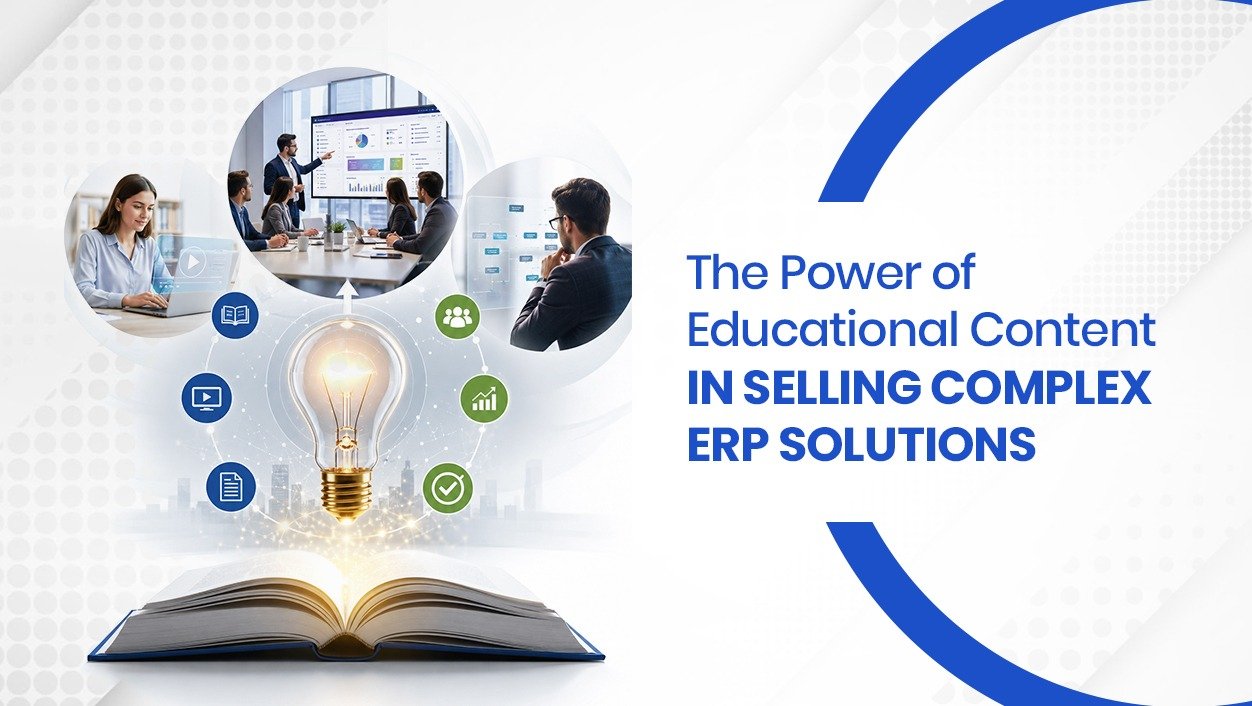
In 2026, the hardest part of selling an ERP solution is not getting attention. It is earning belief. Manufacturing buyers are not sitting around waiting for a pitch deck to change their minds. Gartner’s latest sales survey says 67% of B2B buyers prefer a rep-free experience and 45% said they used AI during a recent purchase. Forrester says 73% of purchases involve three or more departments, with an average of 13 people inside the buying organization and 9 outside it. 6sense adds another layer: buyers are already capable of completing two-thirds of their journey, including choosing a winning vendor, before engaging sellers. That is the real context for ERP marketing now. Educational content is not a “nice to have” around the sales process. It is the part of the process that makes the sales conversation possible. For complex ERP, especially in manufacturing, buyers are not just evaluating software. They are evaluating whether a partner understands operational reality. They want to know what happens to production continuity, how data moves, how the team will adopt the system, how integrations behave and what the implementation will do to the business before it starts paying back. 6sense notes that due diligence now includes understanding how AI is embedded in solutions, how it changes capabilities, pricing, implementation timelines and data security. That is a strong signal that buyers are not looking for claims. They are looking for clarity. This is where educational content becomes powerful. Not because it is persuasive in a flashy way, but because it reduces uncertainty across a buying group that is already doing most of the work on its own. McKinsey’s research on B2B sales is blunt about the role of content. It says content outweighs both sales presentation and timeliness as a buying factor. It also points out that sellers often see marketing content as generic, which is exactly why generic content fails in complex deals. McKinsey’s conclusion is that content has to be personalized to the decision makers and influencers in specific accounts or industries. That matters a lot in ERP. A CEO is not asking the same question as a CTO. A business owner is not asking the same question as a supply chain head. One wants confidence that the investment will not create chaos. Another wants to know whether the architecture will integrate cleanly, scale properly and stay secure. Educational content works when it helps each of those people see the answer to their own version of the problem, without forcing them into a sales script. This is also why ERP content has to be more operational than promotional. Deloitte’s 2025 Smart Manufacturing survey found that manufacturers see smart manufacturing as a major competitiveness driver, but they also face complex transformations, operational risk, cybersecurity demands and workforce upskilling challenges. Deloitte also found that executives are investing in core technologies, data analytics, cybersecurity controls and internal change teams to manage those transitions. In other words, the buying environment is already shaped by risk, not excitement. Educational content earns attention when it respects that reality. The best ERP content does not try to sound bigger than the buyer’s problem. It explains the problem better than the buyer expected. It shows the cost of poor data, the operational impact of bad rollout planning, the hidden burden on internal teams and the difference between a feature and a working process. That is what gives content credibility with leadership teams who have seen enough vendor promises to become careful. Content Marketing Institute’s 2026 B2B research supports that shift in how trust is built. It reports that 96% of B2B marketers say their organization creates thought leadership content, but only a small fraction manage it at an advanced or leading level. It also shows that LinkedIn, email newsletters and speaking events or webinars are viewed as the most effective channels for thought leadership and that marketers measure success not only by engagement but by business impact and brand authority. The message is clear: strong educational content is becoming a strategic asset, not a campaign filler. That point is easy to miss when people talk about content in abstract terms. For complex ERP, educational content is not just about awareness. It does three practical jobs. First, it lowers the perceived implementation risk before a formal sales cycle begins. If a manufacturer understands what the rollout will actually involve, the conversation becomes less emotional and more serious. Second, it creates shared language across departments. In a buying group that spans operations, IT, finance and leadership, good educational content gives people a common frame. Without that, every stakeholder builds a different story in their head and the deal slows down. That dynamic fits what Forrester describes about modern buying networks, where multiple departments and a large number of internal and external participants shape the decision. Third, it helps the buyer self-qualify. That may sound simple, but it is important. The best educational content does not force urgency. It helps the right buyers recognize fit, complexity and readiness. For ERP, that often matters more than persuasion. This is why the weakest ERP content usually looks the same. It leads with generic transformation language, claims efficiency without showing the mechanics and talks about AI or automation without explaining what those features actually do in a manufacturing environment. Buyers do not reject that content because they dislike marketing. They reject it because it does not reduce uncertainty. The strongest content, by contrast, tends to be very specific. It explains implementation stages. It addresses data migration honestly. It shows how workflows change for different teams. It answers the questions buyers are too cautious to ask in a first sales call. It is not trying to close the deal. It is trying to make the deal discussable. That is the deeper power of educational content in ERP selling. In a market where buyers want to research independently, involve more stakeholders and understand the operational consequences before they commit, educational content becomes the bridge between curiosity and confidence. Gartner’s research
Personal Branding for Professionals: A Guide to Building Your Online Reputation
Did you know: Personal Branding Matters More Than Ever. Your Name Has Become Your First Impression “Have you heard of her?” “Not really. Let me Google her.” It’s a conversation that happens every day. Before replying to your email, accepting your connection request, scheduling a meeting, shortlisting your CV, or signing a contract, people usually do one thing first. They search your name. Sometimes that search happens on Google. Sometimes it’s LinkedIn. Increasingly, it’s through AI-powered search tools that summarise who you are using publicly available information. Within seconds, someone who has never met you can form an opinion about your experience, credibility and professional reputation. They may discover insightful articles you’ve written, interviews you’ve given, recommendations from colleagues, media mentions, speaking engagements, or examples of your work. Equally, they may find outdated profiles, inconsistent information, or almost nothing at all. That first search often shapes every interaction that follows. Not long ago, your CV introduced you. Your business card started conversations. Your reputation travelled through referrals and word of mouth. Today, your name has become your introduction. Long before you walk into a meeting or answer a phone call, people have often formed an opinion about who you are and whether you’re someone they can trust. This shift has fundamentally changed what personal branding means. It is no longer about becoming an influencer or building a large social media following. It is about ensuring that your professional reputation is accurately represented wherever people choose to learn about you. People Aren’t Searching for Information. They’re Searching for Confidence. Think about the last time someone recommended a consultant, doctor, lawyer, architect, or even a potential employee to you. What did you do? You probably searched their name. You weren’t simply looking for a job title or checking where they worked. You were trying to answer a much more important question: Can I trust this person? The people searching for you are asking exactly the same question. A strong personal brand helps answer that question before the first conversation ever takes place. It gives people confidence through evidence. Articles you’ve written, projects you’ve delivered, recommendations you’ve earned, interviews you’ve participated in, conferences where you’ve spoken and organisations you’ve worked with all contribute to the impression people form about you. People don’t expect perfection. They expect proof. AI Is Changing How Professional Reputation Is Built Search itself is evolving. Increasingly, people aren’t clicking through multiple websites to research someone. They’re asking AI platforms to summarise who that person is, what they’re known for and whether they’re credible. Those summaries are built from your digital footprint, including your website, professional profiles, published articles, interviews, media coverage, reviews and other publicly available sources. In other words, your online presence is no longer just being discovered. It’s being interpreted. Every article you publish, every interview you give, every conference you speak at, every expert opinion you share and every public mention of your work contributes to the story AI and search engines tell about you. That’s why personal branding is no longer just about visibility. It’s about shaping a reputation that accurately reflects the expertise you’ve spent years building. The opportunities you pursue tomorrow may begin with a simple online search today. The question is no longer whether people will search your name. The real question is what they’ll find when they do. Define What You Want to Be Known For One of the biggest mistakes people make when building a personal brand is trying to be known for everything. They describe themselves using broad job titles, long lists of skills, or generic statements that could apply to hundreds of other professionals. The result is that people remember very little. The strongest personal brands are built around clarity. When someone mentions your name, there should be an immediate association with a particular area of expertise, industry, or problem you solve. That’s how recognition is created. Think about respected professionals in your own field. You probably associate them with one specific strength rather than an entire CV. Some are recognised for digital transformation, others for corporate law, financial strategy, healthcare innovation, cybersecurity, or sustainable manufacturing. Their reputation wasn’t built overnight. It was shaped by consistently demonstrating expertise in the same area over many years. Before thinking about websites, social media, or content, take a step back and define the position you want to own. Ask yourself: These answers become the foundation of your personal brand. For example, an ERP consultant shouldn’t simply aim to be recognised as someone who implements software. A far stronger position is becoming the person businesses trust to simplify operations, improve visibility and support growth through ERP transformation. Likewise, a doctor isn’t remembered because they hold a medical qualification. They’re remembered because patients associate them with successful outcomes, compassionate care, or expertise in treating a particular condition. The same principle applies whether you’re a lawyer, architect, accountant, engineer, consultant, or entrepreneur. People rarely remember job titles. They remember expertise that solves a problem. Once you’ve defined what you want to be known for, every public interaction should reinforce that position. The articles you write, the presentations you give, the interviews you participate in, the projects you showcase and even the conversations you contribute to should all point in the same direction. Personal branding isn’t about saying you’re an expert. It’s about making it obvious why people should remember you. Explore how we help doctors and healthcare professionals build trusted personal brands through digital marketing strategies Your Reputation Is Built Before You Walk Into the Room A personal brand isn’t built by posting every day or trying to become the loudest voice online. It is built through the reputation you create over time and the evidence that supports it. Every article you publish, every interview you give, every conference you speak at, every client you help and every professional conversation you contribute to becomes another piece of your digital identity. Individually, these actions may seem small. Collectively, they shape how people perceive you
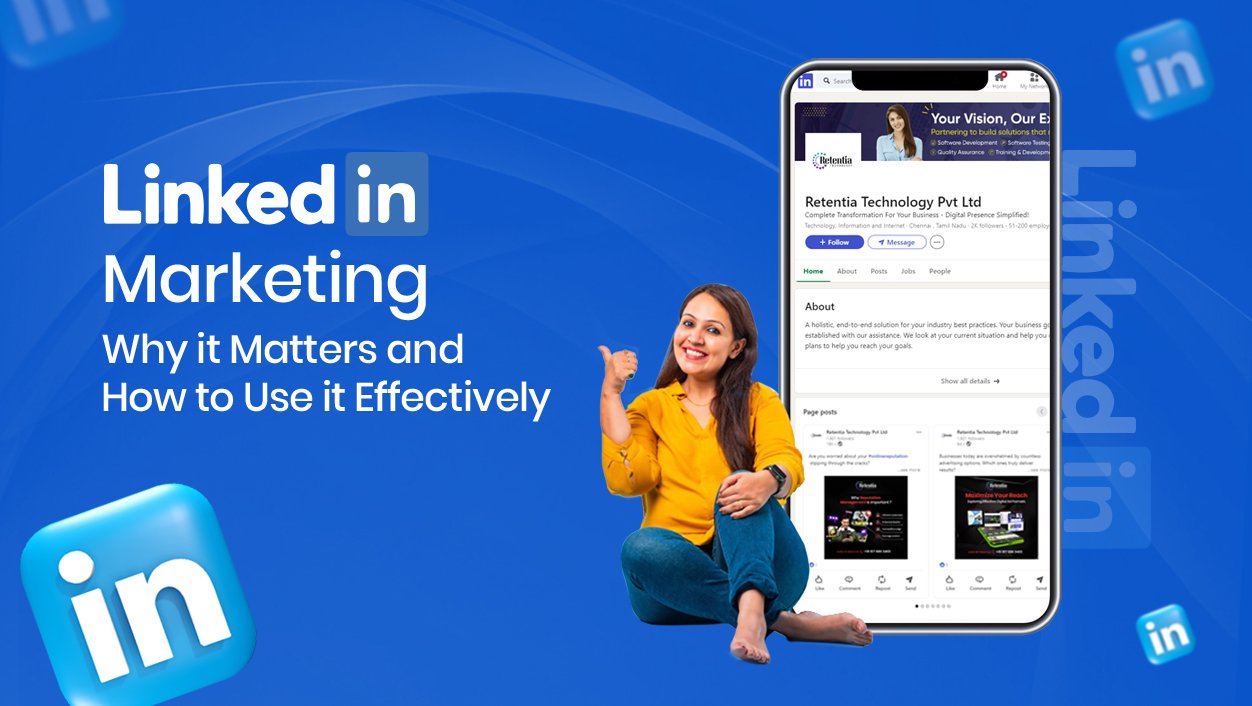
LinkedIn Marketing: Why It Matters and How to Use It Effectively
For many businesses, LinkedIn has become part of the weekly marketing routine. A few posts go live each week, company updates are shared and occasionally someone comments on an industry trend. Yet months later, the same question keeps coming up. “Why isn’t LinkedIn generating business?” The reality is that being active on LinkedIn isn’t the same as having a LinkedIn marketing strategy. Posting consistently alone won’t build credibility, generate qualified enquiries, or influence buying decisions. The businesses that see real results create content that speaks to the right audience, addresses genuine business challenges and demonstrates expertise long before a sales conversation begins. Whether your goal is to increase brand visibility, generate B2B leads, or establish your business as a trusted authority, LinkedIn offers opportunities that few other platforms can match. The companies achieving the strongest results aren’t necessarily posting more often. They’re posting with a clear strategy and a deep understanding of what their audience actually wants to see. In this guide, we’ll explore why LinkedIn marketing has become an essential part of B2B growth, where many businesses go wrong and the practical strategies that can help you turn LinkedIn into a channel for building authority, generating qualified leads and supporting long-term business growth. Why Has LinkedIn Become Essential for B2B Marketing? LinkedIn has evolved far beyond being a platform for recruitment and professional networking. Today, it’s one of the most influential digital channels for B2B businesses looking to build credibility, connect with decision-makers and generate qualified leads. Unlike other social media platforms, LinkedIn brings together business owners, senior executives, procurement professionals and industry specialists who actively use the platform to stay informed, discover solutions and evaluate potential suppliers. In many cases, a buyer’s first impression of your business is formed through your LinkedIn presence, long before they visit your website or speak with your sales team. This change in buyer behaviour has made LinkedIn an important part of the B2B decision-making process. Potential customers are no longer waiting to be approached by sales teams. Instead, they’re researching companies, reading industry insights, comparing expertise and engaging with businesses that consistently provide valuable content. For organisations, this creates an opportunity to move beyond traditional advertising. A well-planned LinkedIn marketing strategy helps businesses educate their audience, demonstrate expertise and build trust through consistent, relevant content. Over time, this positions the business as a credible partner rather than just another service provider. Whether you’re promoting professional services, ERP solutions, healthcare, manufacturing, or technology, LinkedIn allows you to reach the people who influence buying decisions. When used strategically, it becomes more than a social media platform. It becomes a channel for building relationships, strengthening brand authority and creating opportunities for long-term business growth. Why Businesses Are Investing More in LinkedIn Marketing The growing importance of LinkedIn isn’t just driven by its user base. It’s driven by how businesses buy. Today’s B2B buyers often complete a significant part of their research before contacting a supplier. They compare providers, review company pages, explore leadership profiles and consume educational content to understand which businesses genuinely understand their challenges. This shift means companies need to earn trust before the first sales conversation takes place. An effective LinkedIn marketing strategy helps businesses: Businesses that consistently provide useful insights are far more likely to be remembered when a purchasing decision is made. Rather than relying solely on outbound sales, LinkedIn enables organisations to attract opportunities by demonstrating expertise where their audience is already spending time. Why Do Most Businesses Struggle with LinkedIn Marketing? Many businesses invest time in LinkedIn without seeing meaningful results. They post regularly, share company updates, celebrate milestones and occasionally promote their services. While these activities keep the page active, they rarely generate qualified enquiries or create lasting engagement. The problem usually isn’t the platform. It’s the strategy behind the content. LinkedIn is a professional network where people look for ideas, expertise and solutions to business challenges. Yet many companies use it as a noticeboard for internal updates rather than a platform to educate and build trust with potential customers. As a result, businesses often mistake activity for progress. They measure success by likes and impressions while overlooking the metrics that matter most, such as meaningful conversations, profile visits from decision-makers, website enquiries and new business opportunities. Successful LinkedIn marketing starts with understanding that people don’t visit the platform looking to buy immediately. They come to learn, solve problems and connect with businesses that consistently provide valuable insights. Companies that recognise this shift create content that supports the buyer’s journey instead of interrupting it with sales messages. Common Mistakes That Limit LinkedIn Marketing Results Focusing on Products Instead of Problems One of the biggest mistakes businesses make is talking too much about themselves. Posts announcing new services, company achievements, or product features have their place, but they shouldn’t dominate your content strategy. Decision-makers are far more interested in content that helps them solve operational challenges, improve performance, or make better business decisions. The most effective LinkedIn content starts with the audience’s pain points rather than the company’s offerings. Treating LinkedIn Like Every Other Social Platform Content that performs well on Facebook or Instagram doesn’t always resonate on LinkedIn. LinkedIn users expect professional insights, practical advice, industry expertise and informed opinions. Businesses that simply recycle promotional social media posts often struggle to build credibility because the content doesn’t match the expectations of the audience. Posting Without a Clear Strategy Consistency is important, but consistency alone isn’t enough. Many businesses publish content simply to remain active, without defining who they’re trying to reach or what they want each post to achieve. An effective LinkedIn marketing strategy should support clear business objectives, whether that’s increasing brand awareness, generating qualified leads, building thought leadership, or strengthening relationships with existing clients. Ignoring Personal Branding On LinkedIn, people engage with people before they engage with businesses. Company pages play an important role, but posts shared by business owners, consultants, directors and subject matter experts often receive significantly higher engagement because they feel