
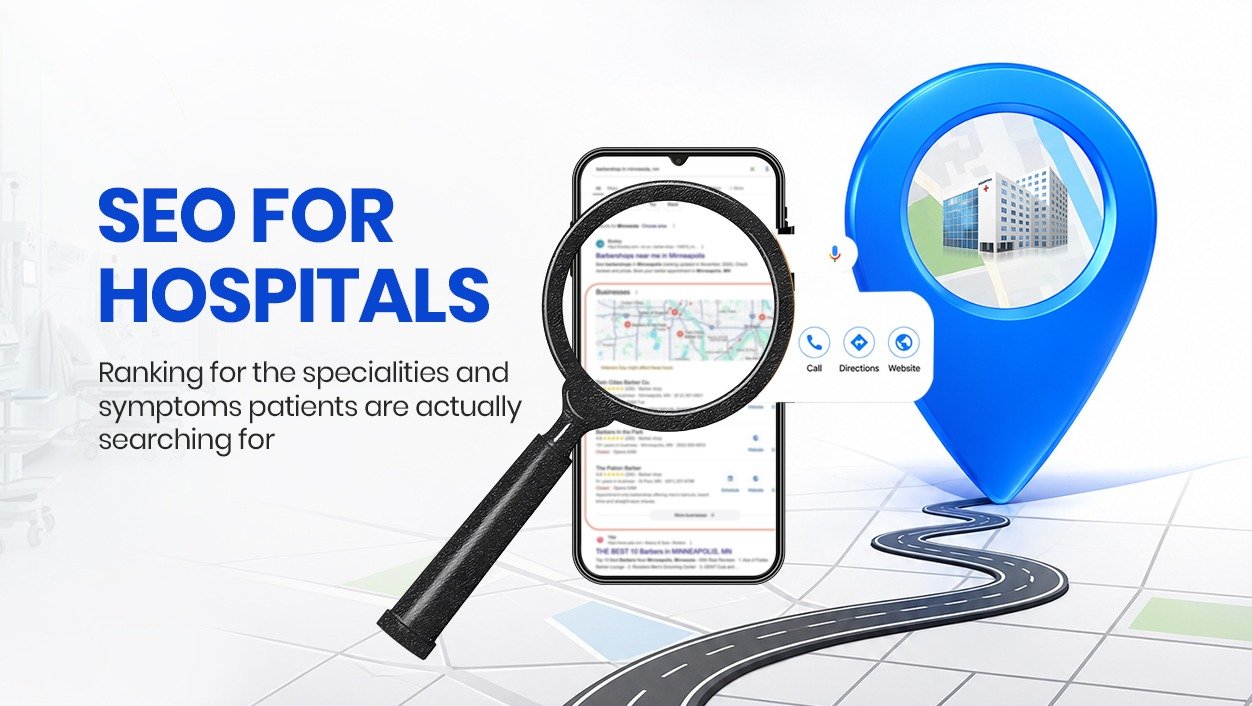
A patient rarely begins their healthcare journey by searching for a hospital name. More often, they start with the problem in front of them: a persistent headache, unexplained stomach pain, knee pain that has started affecting daily life, or a question about whether a particular symptom needs medical attention. The search may then change as they learn more. A symptom becomes a possible condition. A condition leads to a specialty. A specialty leads to a doctor. And eventually, the patient may be looking for a hospital, a location, reviews or an appointment. That progression is important because hospital SEO has traditionally focused heavily on the final part of that journey: hospital names, specialties, treatments and location-based searches. Those searches still matter. But they are only one part of how patients discover and evaluate healthcare providers. In 2026, the opportunity for hospitals is broader. Search is becoming more conversational, AI-powered search experiences are becoming part of the discovery process, local search remains important, and patients have more ways to research a doctor or hospital before taking the next step. The question is no longer simply, “How do we rank our hospital website?” It is: “When a patient starts looking for help, can they find the right information from us at the point they need it?” The patient does not search like your hospital is organised Hospital websites are usually structured around the organisation itself. There is a cardiology department. An orthopaedics department. Gastroenterology. Neurology. Oncology. General surgery. Patients do not necessarily begin with those categories. Someone with recurring knee pain might search for: “Why does my knee hurt when I climb stairs?” Another person may search: “Knee pain when walking but no injury” Later, the same person might search: “Which doctor treats knee pain?” And eventually: “Orthopaedic specialist near me” These are different searches, but they may belong to the same patient journey. Research into online health information seeking has consistently shown that people use search engines to investigate symptoms, conditions and treatment options. The important point for hospitals is not a single percentage or a particular keyword. It is the underlying behaviour: patients often begin with a question about their health before they know exactly what service or specialist they need. That gives hospital marketers a useful way to rethink SEO. Instead of asking only which keywords have search volume, ask what the patient is trying to understand at each stage of the journey. Visual concept: Symptom search → Condition/Specialty research → Doctor evaluation → Appointment & care. This is the first major visual break in the article and should sit here because it explains the central argument before the article moves into strategy. SEO for hospitals starts with search intent, not a keyword list Keyword research still matters. It tells you what people search for, how they phrase their questions and which topics deserve attention. The problem starts when keyword research becomes the strategy itself. A hospital might create a list containing: That list is useful, but it does not tell you what the patient needs from each search. Consider three searches: “Why does my heart race at night?” The person is looking for information and trying to understand a symptom. “Heart palpitations which doctor should I see?” Now the person is trying to connect the problem with a type of medical expertise. “Cardiologist near me” The search is much closer to choosing a provider. Those three searches should not necessarily lead to the same page. A strong hospital website connects them logically. A symptom or condition page can explain the issue responsibly, link to the relevant specialty, introduce appropriate specialists and make the next step clear. That is what search intent looks like when it is applied properly. Build the website around the questions patients actually ask A hospital does not need hundreds of pages simply because hundreds of keywords exist. In fact, creating large volumes of low-value content simply to capture search traffic can work against the principles Google recommends. Google currently emphasises people-first content and specifically warns against producing lots of content primarily to attract search-engine visits or using automation at scale without adding meaningful value. The better approach is to build useful connections between related topics. Take cardiology as an example. A strong specialty section might connect: Cardiology → symptoms → conditions → diagnostic tests → treatments and procedures → relevant doctors → locations → appointment information A patient researching palpitations may need an explanation of the symptom first. Someone already diagnosed with atrial fibrillation may need condition-specific information. Another person may already know they need a cardiologist and simply want to evaluate a particular doctor. The website should accommodate those different levels of intent without forcing everyone through the same journey. This is why information architecture matters so much in hospital SEO. The goal is not to create more pages. The goal is to create the right relationships between pages. Where should a hospital start with SEO? This is probably the question most healthcare teams have once they realise their current website is not performing as well as it should. The answer is not to immediately publish 50 new blogs. Start with what you already have. 1. Audit the existing website Before creating new content, find out what the current website is already doing. Look at the pages receiving organic traffic, the pages generating impressions without meaningful clicks, the service lines with weak visibility, outdated medical information, duplicate or overlapping content, weak doctor profiles and technical issues that may prevent important pages from being properly discovered. This exercise often reveals something interesting: a hospital may already have the expertise and content needed to compete, but that expertise is buried inside pages that are difficult for both patients and search engines to understand. That is an opportunity. 2. Prioritise the specialties that matter A hospital does not need to optimise every department at once. Start with the service lines that combine genuine clinical capability with patient demand and organisational priority. For each one, ask:
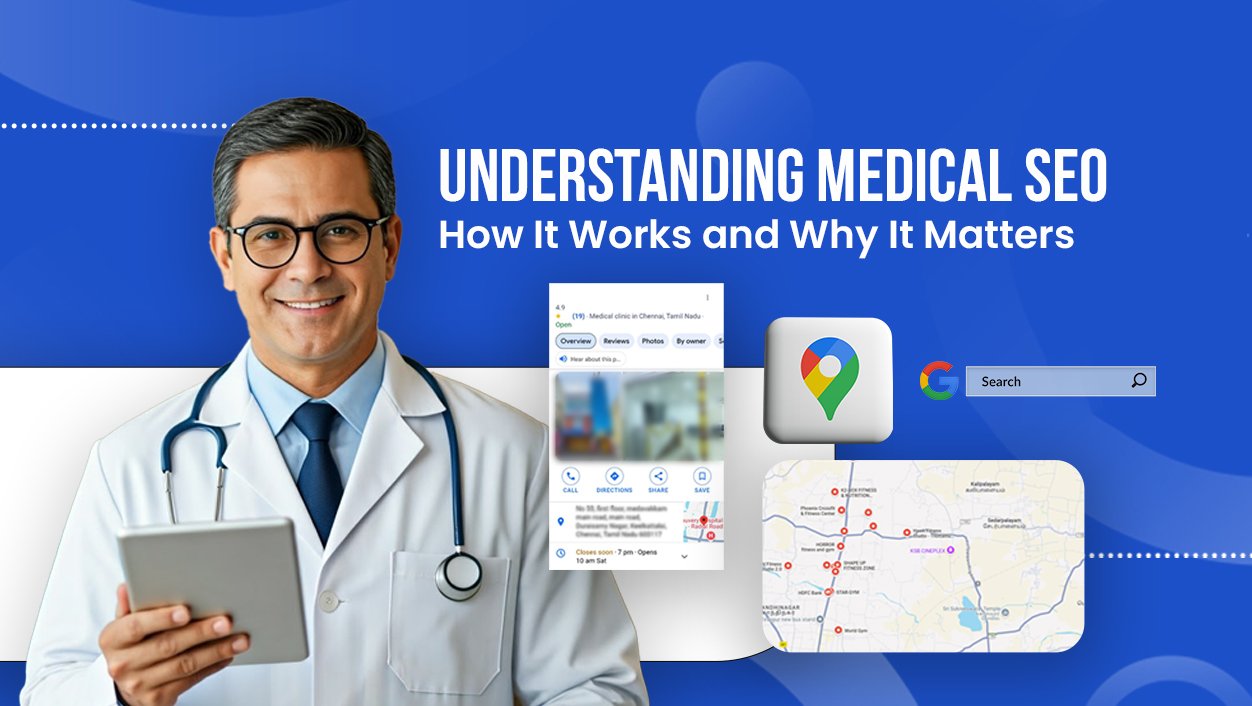
Understanding Medical SEO: How It Works and Why It Matters
Your mother needs a knee replacement. You do not have a list of knee surgeons sitting on your phone. You call a friend. Perhaps they have been through something similar and can give you a doctor’s name. Then you do what most people would do now: you Google it. You search for the doctor, look at the hospital, check where the specialist consults and read reviews. You search for the procedure, look at another doctor and perhaps search “knee surgeon near me” to compare the names that appear. You have not booked an appointment yet, but you have already started filtering your options. That is the part of healthcare marketing many organisations still underestimate. Patients are making decisions about healthcare providers in search long before they make contact with the provider. This is where medical SEO earns its place. The job is not simply to make a hospital appear when someone searches its name. It is to make the organisation discoverable when someone is trying to work out what they need, which specialist can help and where they should go. And in 2026, that search is happening across a more complicated environment, including Google’s AI-powered search experiences. The question for healthcare organisations is whether the right information appears when the patient is making that decision. The search starts with a problem, not a hospital name Think about the searches people actually make: “Why does my knee hurt when I walk?” “Should I see an orthopaedic surgeon for knee pain?” “Knee replacement surgeon near me”, “Dr X reviews” and “Hospital Y knee replacement”. These are not five versions of the same query. They represent different stages of a decision. The first is about understanding a problem, the second about identifying the appropriate type of care, the third about finding a provider, and the fourth and fifth about evaluating that provider. A healthcare website needs to account for this progression. Yet many SEO programmes still revolve around a publishing target: ten blogs a month, twenty keywords, another batch of location pages. That can create a large website without creating a particularly useful one. The question we ask first should be: what does a patient need to know before they are willing to contact this organisation? That question produces a very different content strategy. Medical SEO has a higher bar because the subject has consequences If a product review is inaccurate, someone may waste money. If medical information is inaccurate, the consequences can be considerably more serious. Google’s guidance reflects this. Health-related subjects fall within areas where strong E-E-A-T matters particularly because the information can affect a person’s health, safety or wellbeing. Google describes these concepts as Experience, Expertise, Authoritativeness and Trustworthiness, with trust given particular importance. For healthcare organisations, this should change how content is produced. A page about a treatment should not read like generic copy assembled from the first page of Google. Patients should be able to understand where the information comes from and, where appropriate, who wrote or reviewed it. Medical claims need to be handled carefully, references should lead to credible sources, and content that has become outdated needs to be reviewed rather than left online indefinitely because it still generates traffic. This is particularly important for organisations publishing at scale. More medical content is not automatically better medical SEO. If a hospital has 300 health articles but its core treatment pages are weak, its SEO priorities are probably in the wrong order. The pages closest to the appointment deserve more attention Take a patient searching for IVF. They may read about infertility first. They may research IVF success factors and compare treatment approaches. Eventually, however, the search often becomes much more specific: Which fertility clinic should I contact? This is where the clinic’s own service page becomes important. A useful IVF page should give the prospective patient enough information to understand the treatment, the clinic, the relevant specialists and the next step. The same principle applies to cardiology, oncology, orthopaedics, ophthalmology, fertility, dentistry or any other speciality. A strong medical SEO programme should therefore look closely at treatment pages, specialist profiles, location pages, patient pathways and conversion paths. This is where SEO and website strategy meet. A page can rank and still do a poor job of helping a patient choose the organisation. Local search is part of provider selection Now return to the person looking for a knee surgeon. They may not care who has the most backlinks. They care that the surgeon is accessible, the hospital is credible, the location works for them and the service they need is actually available there. Google says local results are influenced primarily by relevance, distance and prominence. It also recommends keeping Business Profile information complete and accurate. That makes local SEO particularly relevant to healthcare. The organisation’s location needs to be clear, services need to be accurately represented, specialist information should agree with what the organisation actually offers, and Business Profile details should be maintained rather than treated as something to set up once and forget. Reviews matter here too. Google includes reviews within its explanation of local prominence. But there is an important distinction: do not collect reviews simply because someone told you reviews are an SEO ranking tactic. Patients use them when evaluating providers, which makes reputation management a patient decision issue first and an SEO consideration second. Medical SEO is changing as search becomes more conversational Now consider the same patient using a more conversational search: “My father has persistent knee pain and difficulty walking. What type of specialist should we see and what treatment options might be considered?” That is very different from searching for a keyword such as “knee surgeon”. Google is increasingly providing AI-generated responses through features including AI Overviews and AI Mode, allowing users to explore more complex questions directly within Search. Google has also published guidance for website owners on its generative AI search experiences. This has led to a rush of terminology around GEO, AI SEO and optimisation

The Power of Educational Content in Selling Complex ERP Solutions
In 2026, the hardest part of selling an ERP solution is not getting attention. It is earning belief. Manufacturing buyers are not sitting around waiting for a pitch deck to change their minds. Gartner’s latest sales survey says 67% of B2B buyers prefer a rep-free experience and 45% said they used AI during a recent purchase. Forrester says 73% of purchases involve three or more departments, with an average of 13 people inside the buying organization and 9 outside it. 6sense adds another layer: buyers are already capable of completing two-thirds of their journey, including choosing a winning vendor, before engaging sellers. That is the real context for ERP marketing now. Educational content is not a “nice to have” around the sales process. It is the part of the process that makes the sales conversation possible. For complex ERP, especially in manufacturing, buyers are not just evaluating software. They are evaluating whether a partner understands operational reality. They want to know what happens to production continuity, how data moves, how the team will adopt the system, how integrations behave and what the implementation will do to the business before it starts paying back. 6sense notes that due diligence now includes understanding how AI is embedded in solutions, how it changes capabilities, pricing, implementation timelines and data security. That is a strong signal that buyers are not looking for claims. They are looking for clarity. This is where educational content becomes powerful. Not because it is persuasive in a flashy way, but because it reduces uncertainty across a buying group that is already doing most of the work on its own. McKinsey’s research on B2B sales is blunt about the role of content. It says content outweighs both sales presentation and timeliness as a buying factor. It also points out that sellers often see marketing content as generic, which is exactly why generic content fails in complex deals. McKinsey’s conclusion is that content has to be personalized to the decision makers and influencers in specific accounts or industries. That matters a lot in ERP. A CEO is not asking the same question as a CTO. A business owner is not asking the same question as a supply chain head. One wants confidence that the investment will not create chaos. Another wants to know whether the architecture will integrate cleanly, scale properly and stay secure. Educational content works when it helps each of those people see the answer to their own version of the problem, without forcing them into a sales script. This is also why ERP content has to be more operational than promotional. Deloitte’s 2025 Smart Manufacturing survey found that manufacturers see smart manufacturing as a major competitiveness driver, but they also face complex transformations, operational risk, cybersecurity demands and workforce upskilling challenges. Deloitte also found that executives are investing in core technologies, data analytics, cybersecurity controls and internal change teams to manage those transitions. In other words, the buying environment is already shaped by risk, not excitement. Educational content earns attention when it respects that reality. The best ERP content does not try to sound bigger than the buyer’s problem. It explains the problem better than the buyer expected. It shows the cost of poor data, the operational impact of bad rollout planning, the hidden burden on internal teams and the difference between a feature and a working process. That is what gives content credibility with leadership teams who have seen enough vendor promises to become careful. Content Marketing Institute’s 2026 B2B research supports that shift in how trust is built. It reports that 96% of B2B marketers say their organization creates thought leadership content, but only a small fraction manage it at an advanced or leading level. It also shows that LinkedIn, email newsletters and speaking events or webinars are viewed as the most effective channels for thought leadership and that marketers measure success not only by engagement but by business impact and brand authority. The message is clear: strong educational content is becoming a strategic asset, not a campaign filler. That point is easy to miss when people talk about content in abstract terms. For complex ERP, educational content is not just about awareness. It does three practical jobs. First, it lowers the perceived implementation risk before a formal sales cycle begins. If a manufacturer understands what the rollout will actually involve, the conversation becomes less emotional and more serious. Second, it creates shared language across departments. In a buying group that spans operations, IT, finance and leadership, good educational content gives people a common frame. Without that, every stakeholder builds a different story in their head and the deal slows down. That dynamic fits what Forrester describes about modern buying networks, where multiple departments and a large number of internal and external participants shape the decision. Third, it helps the buyer self-qualify. That may sound simple, but it is important. The best educational content does not force urgency. It helps the right buyers recognize fit, complexity and readiness. For ERP, that often matters more than persuasion. This is why the weakest ERP content usually looks the same. It leads with generic transformation language, claims efficiency without showing the mechanics and talks about AI or automation without explaining what those features actually do in a manufacturing environment. Buyers do not reject that content because they dislike marketing. They reject it because it does not reduce uncertainty. The strongest content, by contrast, tends to be very specific. It explains implementation stages. It addresses data migration honestly. It shows how workflows change for different teams. It answers the questions buyers are too cautious to ask in a first sales call. It is not trying to close the deal. It is trying to make the deal discussable. That is the deeper power of educational content in ERP selling. In a market where buyers want to research independently, involve more stakeholders and understand the operational consequences before they commit, educational content becomes the bridge between curiosity and confidence. Gartner’s research
How User-Generated Content Fuels Brand Success?
When was the last time you bought something online without checking what other people had to say about it? You might read reviews before ordering a product, look through customer photos before buying clothes, search Instagram before booking a restaurant or check Reddit before spending money on something unfamiliar. These are now ordinary parts of how people research what to buy. What they are looking for is not another advertisement. They want to know what the product, service or experience is actually like from someone who has been through it. That is where user-generated content (UGC) becomes valuable. A customer review, product photograph, Instagram post, YouTube video, testimonial or online discussion can give prospective buyers information that a brand’s own marketing cannot provide in quite the same way. Research published in the Journal of the Academy of Marketing Science found that consumers generally perceive UGC as more believable than brand communications, while factors such as verification and perceived manipulation can affect how effective that content becomes. The important point is not that every customer post is automatically trustworthy. It is that real customer experiences can become evidence for the next buyer. What is user-generated content? User-generated content is content created by customers, users, fans or members of a community about a brand, product or experience rather than produced as ordinary brand marketing. It can include: There is one distinction worth making in 2026. Organic UGC and paid UGC are not necessarily the same thing. A customer who independently posts a photograph of something they bought is creating organic UGC. A creator who is paid by a brand to produce a customer-style video is creating commissioned content. Both can be useful. But they should not be presented as though they represent the same type of independent customer experience. Why does UGC influence buying decisions? Think about what happens when someone is unsure about a purchase. The questions are rarely limited to “Is this product good?” They are more likely to be: Brand content can answer some of these questions. Customer content can answer others because it comes from the experience of using the product or service. A detailed review saying why someone bought a product, what they liked, what disappointed them and whether they would purchase again gives another buyer something to evaluate. That is more useful than ten reviews simply saying “Amazing product.” The value of UGC is not that it praises the brand. It is that it reduces uncertainty. Different types of UGC serve different purposes Not all UGC does the same job. Reviews and ratings Reviews are particularly useful when someone is already considering a purchase and wants reassurance before committing. A detailed review can address quality, usability, delivery, fit or customer service. It can also reveal objections that the brand may not have considered. Customer photos Customer photographs answer a question that polished product photography cannot always answer: What does this actually look like in real life? This is especially useful for fashion, jewellery, beauty, furniture and other products where scale, colour, fit or appearance can be difficult to judge from studio images. Videos and Reels Video can demonstrate how a product looks, moves, fits or works. For some products, a 20-second customer video can answer more questions than several paragraphs of product copy. Testimonials and customer stories A testimonial becomes more valuable when it explains the situation behind the purchase. What problem did the customer have? Why did they choose the company? What happened afterwards? That is particularly important in B2B, where another company’s experience can help a prospective buyer judge whether a supplier understands a similar situation. Community discussions Reddit threads, forums and social discussions can be less polished but particularly useful. People compare alternatives, discuss problems, share workarounds and explain what they wish they had known before buying. For marketers, those conversations can also reveal the language customers actually use when describing a problem. Where does UGC fit into the customer journey? UGC is not simply a social media tactic. A 2025 review examining 342 studies of UGC found that it can influence different stages of the customer journey, including pre-purchase, purchase and post-purchase behaviour. At the awareness stage, a customer’s post can introduce someone to a product or brand. During research, reviews, videos and community discussions can help them compare options. Closer to purchase, customer photographs, ratings and testimonials can remove the final doubts. After purchase, that same customer may create the next piece of UGC. This creates a useful cycle: Customer experience → customer content → buyer research → purchase → new customer experience That is much more valuable than treating UGC as something to fill an Instagram calendar. Does UGC help SEO? This is where businesses need to be careful. UGC is not an automatic SEO ranking factor. Adding a review section to a page does not guarantee higher rankings. Nor does filling a website with customer comments make a page “optimised”. The opportunity is more practical. Genuine customer content can add first-hand information, answer questions, introduce language customers actually use and make product or service pages more useful. For example, a jewellery brand may describe the size, finish and design of a product. A customer’s photograph can show how large the piece looks when worn. A review might explain how it paired with a particular saree or how the colour appeared in natural light. That additional information can make the page more useful to the person researching the product. Google’s own guidance focuses on helpful, reliable, people-first content rather than content created simply to manipulate search rankings. So the SEO strategy should not be: “Add UGC to rank.” It should be: “Use genuine customer experiences to make important pages more useful.” How can businesses encourage better UGC? The easiest way is to ask at the right time and ask a better question. Instead of: “Please leave us a review.” Ask: Specific questions tend to produce information that other customers can actually use. For visual products, ask customers to share
Why Your Website Is Still the Most Valuable Digital Asset in 2026
There was a time when a business website had one obvious job: tell people who you are and give them a way to contact you. That is no longer enough. In 2026, people can discover a business through Google Search, AI-generated answers, LinkedIn, Instagram, YouTube, marketplaces, reviews, referrals and increasingly through conversations with AI assistants. So it is tempting to think the website has become less important. The opposite is happening. The website is becoming the source that everything else depends on. Your social profiles may introduce you. An AI assistant may mention you. Google may surface one of your pages in an answer. A customer may arrive through a review or a referral. But when someone wants to establish whether your business is actually credible, relevant and worth speaking to, they still need somewhere to go deeper. That place is usually your website. And in 2026, its value goes beyond traffic. 1. Your website is the part of your digital presence you control There is an important distinction here. You don’t literally “own” every technical component of a website. Your hosting provider, CMS, domain registrar and other services are still third-party infrastructure. But you control the digital property itself in a way you don’t control a social platform. LinkedIn can change how content is distributed. Instagram can change what appears in someone’s feed. A platform can change its advertising model, algorithms, features or terms. Your website gives you control over the content, structure, navigation, conversion journey and the way your business is represented. That control matters more as the number of channels around your business continues to grow. 2. Your website is no longer just a destination. It is a source. This is one of the biggest changes from the old SEO model. Previously, the objective was relatively simple: get someone to search, rank, get the click and bring them to the website. AI search complicates that journey. A person can now ask a much more detailed question and receive an answer that draws on information from multiple sources. Google has introduced AI Overviews and AI Mode and Google Search Console has begun adding reporting for visibility within generative AI features. That changes what a good website needs to do. It needs to contain information that is clear enough to understand, specific enough to answer real questions, useful enough to be referenced, structured well enough for search systems to interpret and authoritative enough to support trust. Your website is no longer competing only for clicks. It is competing to become part of the answer. 3. Search has changed, but SEO hasn’t disappeared This is where a lot of 2026 marketing advice goes wrong. You will hear that SEO is dead because people are using AI. That is an unnecessary conclusion. Google’s guidance for AI search continues to emphasise the same fundamentals: make content useful, original, accessible and valuable to people. Google also says the practices that help pages perform in traditional Search remain relevant to its AI experiences. What has changed is the type of questions people can ask. Instead of searching for “CRM software UK”, someone might ask, “What should a 100-person UK professional services company look for when replacing spreadsheets with a CRM?” The second query demands a much better answer. That is an opportunity for businesses with genuinely useful websites. 4. A website can answer the questions your sales team keeps hearing Your sales team already knows what prospects ask. How much does implementation take? Which system is right for our business? What happens to our existing data? Can it integrate with our current software? What does implementation actually involve? What mistakes should we avoid? Why are you different from another provider? Those questions should not remain trapped inside sales calls. They can become service pages, comparison pages, FAQs, guides, case studies, implementation pages, industry pages, technical explanations and customer stories. Now the website becomes part of the sales process rather than a brochure sitting beside it. 5. It gives every other marketing channel somewhere credible to lead A LinkedIn post can create interest. An Instagram Reel can create desire. A Google Ad can create a click. An email can create a response. A referral can create curiosity. But none of those channels has to carry the entire burden of explaining the business. The website can. That is why the question shouldn’t be, “Should we invest in social media or our website?” The better question is: Does our website make the rest of our marketing work harder? If it doesn’t, increasing traffic simply sends more people into the same problem. 6. It is where buyers can verify your claims This matters particularly in B2B. Anyone can say, “We’re experts.” A website can show what that actually means. Case studies. Named services. Specific industries. Implementation experience. Customer outcomes. Technical capabilities. People behind the business. Partners and certifications where relevant. Clear explanations. Evidence. That difference becomes even more important when AI can produce convincing marketing language at enormous scale. Specific evidence is becoming more valuable than polished claims. Google’s people-first guidance similarly stresses original information, first-hand expertise, useful analysis and clear signals about who created the content. 7. Your website can build visibility around questions, not just keywords Traditional SEO often became obsessed with phrases such as “ERP software UK”, “CRM consultant” and “accounting software”. Those terms still have value. But they don’t represent the entire search journey. A buyer may search: These are not just keyword opportunities. They are buying questions. A strong website answers them properly. And that gives search engines and AI systems far more useful material to understand and potentially surface. 8. Your website gives AI something substantial to work with This is where GEO becomes relevant. But I would avoid presenting GEO as “add these keywords and ChatGPT will rank you”. There is no credible basis for that. Google’s guidance around generative AI search continues to point towards useful, unique, accessible content rather than a separate set of magic optimisation tricks. So
Graphic Design Psychology: How Visual Choices Influence Perception
Why does one brand immediately feel credible, while another feels confusing or difficult to trust? Often, the difference isn’t a single design element. It is the way colour, typography, shape, spacing, imagery and visual hierarchy work together to influence what people notice, how they interpret information and what they remember. This is where graphic design psychology becomes relevant. Design psychology is not about assigning a fixed meaning to every colour or shape. It is about understanding how visual decisions can influence attention, perception and interpretation and then using those decisions deliberately to communicate a message. For businesses, this matters because every visual interaction contributes to how the brand is perceived, from a website and social media post to a presentation, advertisement or product interface. What Is Graphic Design Psychology? Graphic design psychology examines the relationship between visual communication and human perception. When people encounter a design, they do not process every element with equal attention. They quickly establish visual priorities, recognise patterns, interpret contrast and spacing and form an impression of what they are seeing. Good design works with these natural patterns of perception. For example, a landing page with a clear headline, supporting information and a visually distinct call to action creates an obvious reading path. A page where everything is the same size, weight and visual intensity makes the viewer work harder to understand what matters. The psychology of design therefore isn’t simply about making something attractive. It is about making the intended message clear, understandable and memorable. 1. Colour Influences Perception, But Context Matters Colour is one of the first things people notice in a visual composition. It can influence mood, emphasis and brand recognition, but colour psychology should not be treated as a universal formula. The same colour can communicate different things depending on its context, cultural associations, intensity and surrounding colours. For example: The important question isn’t: “What does this colour mean?” It is: “What does this colour communicate in this particular context?” A colour palette should therefore be selected based on the brand, audience, industry, message and surrounding visual system rather than psychological shortcuts alone. 2. Shape Influences the Character of a Design Shapes also contribute to how a visual identity feels. Rounded forms can create a softer and more approachable visual character, while angular forms can introduce a stronger sense of structure, movement or energy. Geometric forms can communicate order, while irregular forms can make a design feel more expressive or informal. But, as with colour, there is no universal dictionary where every shape has one fixed psychological meaning. A circle doesn’t automatically mean “community” and a triangle doesn’t automatically mean “action”. Their effect depends on how they are combined with colour, typography, imagery, scale and composition. For a brand, the objective is to create a visual language where these elements support the personality the business wants to communicate. 3. Visual Hierarchy Determines What People Notice First A design can contain all the right information and still fail if the viewer cannot determine where to look first. This is the role of visual hierarchy. Hierarchy establishes different levels of importance within a composition. Designers create it through: Consider a website hero section. If the headline, supporting copy, image and CTA all compete for the same level of attention, the visitor has no obvious starting point. A stronger hierarchy might guide the viewer through: Primary message → supporting information → proof or context → action This isn’t merely an aesthetic decision. It reduces cognitive effort and makes the intended communication easier to follow. 4. Negative Space Is Part of the Message One of the most overlooked elements in graphic design is the space where nothing has been placed. Negative space, or white space, provides separation between visual elements and helps establish hierarchy. Consider two designs containing exactly the same information. One is tightly packed, with little separation between sections. The other gives each element room to breathe. The second design will often feel clearer because the spacing helps the viewer understand which elements belong together and which deserve individual attention. Negative space can therefore help: Empty space isn’t an absence of design. It is part of the design system. 5. Typography Communicates More Than Words Typography is responsible for both readability and tone. The choice of typeface matters, but so do its size, weight, spacing, line height and relationship with other text. A bold headline creates a different visual impression from a lightweight heading. Tight spacing creates a different rhythm from generous spacing. A highly decorative typeface may work in a campaign designed around personality but become difficult to use for technical information. This is why typography should be considered as a hierarchy rather than simply a font selection. A well-designed typographic system helps the audience distinguish between: What is the main message? What explains it? What supports it? What action should I take? The goal is not to make every piece of text visually interesting. It is to make the information easier to understand while establishing an appropriate character for the brand. 6. Consistency Builds Recognition A strong visual identity is not created by choosing a good logo or colour palette once. It comes from applying visual decisions consistently across different touchpoints. A business might use its website, social media, sales presentations, advertisements, email campaigns and printed materials to communicate with the same audience. If each channel uses a completely different visual language, the brand becomes harder to recognise. Consistency doesn’t mean making every asset look identical. It means maintaining a recognisable system through elements such as: Over time, this consistency helps audiences recognise the brand without always needing to see its name or logo. 7. Design Should Support the Decision You Want the Audience to Make This is where design psychology becomes particularly important for business communication. A design should have a purpose beyond looking attractive. A website may need to encourage an enquiry.A presentation may need to make a complex proposition easier to understand.An advertisement may need to communicate one
How to Choose the Right Language Service Provider for Your Business
Expanding into new markets involves more than translating words. Every interaction with a customer, partner, or stakeholder shapes how your business is perceived. If your messaging feels unnatural, culturally out of place, or inconsistent across languages, it can reduce trust and slow business growth. Choosing the right language service provider (LSP) is therefore a strategic business decision, not simply a procurement exercise. Whether you’re translating technical documentation, localising a website, launching multilingual marketing campaigns, or supporting international operations, the right partner should help your business communicate naturally while maintaining accuracy, consistency, and brand identity. This guide explores what businesses should look for when selecting a language service provider and why the decision can have a lasting impact on global growth. What Is a Language Service Provider? A language service provider is an organisation that helps businesses communicate effectively across different languages and markets. While translation is often the most recognised service, modern language service providers offer much broader support, including: The objective isn’t simply to convert text from one language to another. It’s to ensure the intended message is understood naturally by audiences in different regions while preserving the brand’s voice, intent, and credibility. Why Choosing the Right Language Service Provider Matters Poor communication affects more than grammar. A literal translation may change the meaning of technical documentation. Marketing campaigns may lose their emotional appeal. Product descriptions can become confusing, and legal or medical content may introduce unnecessary risk. On the other hand, a well-managed language strategy creates consistency across every customer touchpoint. It helps businesses present a professional image, improve customer confidence, and communicate effectively in global markets. As businesses expand internationally, language becomes part of the customer experience rather than just an operational requirement. What to Look for in a Language Service Provider 1. Native-Level Linguistic Expertise Language is shaped by culture, context, and everyday usage. Professional translation should be carried out by native-language specialists who understand local expressions, business communication styles, and regional expectations. This helps content read naturally rather than appearing translated. 2. Industry Knowledge Every industry has its own terminology, regulations, and communication standards. Whether you’re operating in healthcare, legal services, technology, finance, manufacturing, or engineering, your language partner should understand the terminology relevant to your sector. Industry expertise reduces errors while improving clarity and consistency. 3. Translation and Localisation Capabilities Many businesses confuse translation with localisation. Translation focuses on accurately converting content into another language. Localisation goes further by adapting tone, cultural references, measurements, date formats, currencies, imagery, and messaging to match the expectations of the target market. For customer-facing content, localisation is often just as important as translation. 4. Consistent Brand Voice Your brand should sound like the same organisation regardless of language. An experienced language service provider develops terminology guidelines, translation memories, and style standards that maintain consistency across websites, marketing materials, product documentation, and internal communications. This becomes increasingly valuable as multilingual content grows over time. 5. Structured Quality Assurance Quality should never rely on a single translator. Professional language services typically include multiple review stages, such as editing, proofreading, terminology validation, and linguistic quality checks before content is delivered. A structured review process improves accuracy while reducing the likelihood of costly revisions later. 6. Scalability for Growing Businesses International expansion often begins with one language but rarely ends there. Businesses should evaluate whether a provider can support additional markets, larger content volumes, and ongoing multilingual projects without compromising quality or consistency. Scalable workflows become particularly important for organisations managing websites, product catalogues, customer documentation, and marketing campaigns across multiple regions. 7. Multilingual Website and SEO Support Translating a website doesn’t automatically make it discoverable in international search results. Different countries often use different search terms to describe the same products or services. A language service provider with multilingual SEO expertise understands how translated content, metadata, headings, internal linking, and local search behaviour influence visibility in different markets. This helps businesses improve both communication and international search performance. 8. Secure Content Handling Many translation projects involve confidential business information. Legal contracts, financial reports, healthcare documentation, intellectual property, and internal communications require secure handling throughout the translation process. Businesses should ensure their language partner follows appropriate confidentiality procedures and secure workflows. 9. Long-Term Partnership Language requirements evolve alongside the business. Working with a long-term language partner helps maintain consistency across future projects while reducing onboarding time and improving overall efficiency. Instead of rebuilding terminology and brand guidelines for every project, organisations benefit from an established communication framework that grows with them. Questions to Ask Before Choosing a Language Service Provider Before selecting a provider, businesses should ask questions that go beyond pricing. Consider asking: The answers often reveal far more than a service brochure. Common Mistakes Businesses Make Many organisations focus only on cost when selecting language services. However, lower-cost providers can create additional work if translations require significant revisions or fail to meet business expectations. Other common mistakes include: These decisions may save money initially but often increase long-term costs through inconsistent communication and reduced customer confidence. Choosing a Language Partner That Supports Business Growth The right language service provider should do more than deliver translated documents. They should help your organisation communicate clearly across markets, preserve your brand identity, support international growth, and create consistent experiences for customers wherever they interact with your business. As global business becomes increasingly connected, language is no longer simply about communication. It influences customer trust, market perception, search visibility, and commercial success. Choosing the right partner means selecting a team that understands both language and business. At Retentia Technology, we help organisations communicate confidently across global markets through professional translation, localisation, multilingual content, interpretation, transcreation, and language solutions tailored to business objectives. By combining linguistic expertise with structured workflows and industry understanding, we help businesses deliver consistent communication wherever they operate. Expand into global markets with confidence. Retentia Technology delivers language solutions that preserve your brand voice while helping you communicate naturally across every market. Discuss Your Language Requirements
How the LinkedIn algorithm really works
The LinkedIn algorithm is probably one of the most misunderstood topics in digital marketing. Ask ten creators how it works, and you’ll likely get ten different answers. Some swear by posting times. Others insist on three hashtags, avoiding external links, or replying to comments within the first hour. The problem? Very little of that advice comes directly from LinkedIn. So instead of repeating myths, let’s look at what LinkedIn has actually documented about how its feed works. 1. LinkedIn algorithm first checks for spam Every post goes through an initial quality filter. LinkedIn looks for signals that a post might be: If a post is classified as low quality, its distribution can be limited before many people see it. This comes directly from LinkedIn’s engineering blog and official documentation. 2. Your audience does NOT see your post all at once This is probably the biggest misconception. LinkedIn doesn’t push your post to all your followers. Instead, it shows it to a small sample of your audience first. If those people respond positively, LinkedIn gradually expands distribution. Think of it like: 50 people ↓ 500 people ↓ 5,000 people ↓ 50,000 people The numbers aren’t published, but staged distribution is well documented by LinkedIn. 3. Early engagement matters… …but not simply because it’s “early.” What matters is whether people actually interact in meaningful ways. LinkedIn has repeatedly said it values: A thoughtful comment is generally considered a stronger signal than a simple Like. 4. Comments are not all equal LinkedIn has said it tries to understand conversation quality. Examples: Good: “We’ve seen the same issue with enterprise procurement.” Better signal. Bad: Great Nice Amazing These contribute much less value. 5. Dwell time matters… probably LinkedIn has acknowledged using what it calls “dwell time.” That means: Did someone stop scrolling? Did they spend time reading? It doesn’t necessarily mean they clicked. Simply pausing to read appears to be a positive signal. LinkedIn has confirmed this publicly. 6. Relevance is more important than follower count Someone with 2,000 highly relevant followers often gets more reach than someone with 50,000 uninterested followers. LinkedIn tries to predict: “Will THIS member care about THIS post?” rather than simply rewarding popularity. 7. Expertise matters LinkedIn has said it attempts to surface content from people with expertise. For example: A cybersecurity professional posting about ransomware is more likely to be viewed as authoritative than someone who posts about unrelated topics every day. Your profile, work history, skills, and posting history all help establish topical authority. 8. Native content usually performs better This is observed consistently. Native: often receive broader distribution than posts that primarily drive users off LinkedIn. LinkedIn algorithm wants users to stay on the platform. However, LinkedIn has never officially said “external links are penalized.” 9. Consistency helps LinkedIn has never said: “Post five times per week.” There is no official posting frequency. However, consistent creators generally build stronger audiences because: 10. Relevance beats virality A viral post about productivity won’t necessarily help if you sell ITAD software. LinkedIn’s recommendation systems increasingly optimize for: “Who should see this?” instead of “How many people can we show this to?” This is especially important for B2B. Things people say that are NOT proven These are common claims, but there is no public evidence from LinkedIn supporting them. Never edit your post. Hashtags boost reach. Three hashtags are optimal. The first hour determines everything. Posting at exactly 8:00 AM doubles reach. External links are automatically penalized. Using emojis reduces reach. Using AI-written content is detected and suppressed. None of these have been confirmed by LinkedIn. What consistently works Based on LinkedIn’s published guidance and large-scale analysis, the strongest signals appear to be: This isn’t meant to be the final word on the LinkedIn algorithm. It’s my interpretation of what LinkedIn has publicly documented through its engineering blogs and research papers. If you disagree with any point, I’d genuinely love to hear why. Share the official source or your reasoning in the comments. If I’ve missed something or got it wrong, I’ll happily update the post. Good discussions make all of us better. Understanding the algorithm is only the first step. The real advantage comes from consistently creating content your audience wants to engage with. Retentia Technology helps businesses develop data-driven content, SEO, LinkedIn, and AI search strategies that turn visibility into qualified opportunities. Get in touch to discuss your growth goals. This article was originally published on the Retentia Technology LinkedIn page and has been republished here for our website audience.
Website Development for Startups: Everything You Need to Build a Strong Online Presence
Every Startup Begins with an Idea. Growth Begins with Visibility. Every successful startup starts by solving a problem. Sometimes it’s a founder frustrated by an everyday challenge. Sometimes it’s years of industry experience exposing an inefficient process. In other cases, it’s a new way of delivering an existing service faster, cheaper, or more effectively. An idea may be the foundation, but ideas alone don’t build companies. Turning an idea into a business requires product development, customer validation, funding, operations, and one critical element that many founders underestimate: getting discovered by the right people. No matter how innovative your product is, it cannot generate customers if your audience doesn’t know it exists. In today’s market, your digital presence is often your first product. Long before someone books a demo, makes a purchase, or contacts your team, they research your business online. Every search result, website visit, LinkedIn profile, customer review, and social media interaction shapes their perception of your startup. If your digital footprint is weak, your growth will be too. Why Digital Presence Matters More Than Ever Customers no longer discover businesses the way they did a decade ago. They search. They compare. They read reviews. They visit websites. They evaluate credibility within minutes. For startups without an established reputation, your online presence becomes the trust signal that determines whether prospects move forward or move on. A professional digital presence helps you: Without it, even exceptional products struggle to gain traction. The Biggest Challenges Startups Face Without a Digital Presence You’re Invisible to Your Market Launching a business doesn’t automatically create awareness. Potential customers cannot buy from a company they never discover. If your business isn’t visible in search engines or professional channels, competitors become the default choice. Trust Becomes Harder to Earn Today’s buyers verify everything. A missing website, outdated branding, inconsistent information, or inactive social channels immediately raise concerns about credibility. Professional digital assets reassure customers that your business is legitimate, active, and capable of delivering what it promises. Your Competitors Gain the Advantage While you’re focused on building your product, competitors may already be educating your target audience through content, search visibility, social media, and thought leadership. Visibility compounds over time. The longer you delay building your digital presence, the harder it becomes to compete. Growth Remains Limited Personal networks and referrals are valuable, but they eventually plateau. A strong online presence allows your business to attract customers continuously instead of relying solely on introductions or local opportunities. Marketing Becomes More Expensive Businesses without organic visibility often depend heavily on paid advertising. Building search visibility, content authority, and brand recognition early reduces customer acquisition costs over time while creating sustainable growth channels. How a Strong Digital Presence Accelerates Startup Growth Build Trust Before You Sell Your website, content, customer testimonials, and online reputation work together to answer the questions every prospect asks: The stronger these signals, the shorter your sales cycle becomes. Reach Customers Wherever They Are Digital channels remove geographical limitations. Whether your audience is in another city or another country, your business remains discoverable around the clock through search engines, social media, online directories, and digital campaigns. Generate Leads Consistently Unlike traditional marketing, digital marketing creates multiple customer acquisition channels simultaneously. Search engine optimisation, paid advertising, content marketing, email campaigns, and social media work together to generate enquiries even while your team focuses on operations. Learn What Your Customers Want Every website visit, enquiry, download, and conversion provides valuable data. Analytics help startups understand: These insights allow continuous improvement instead of relying on assumptions. Create a Business That Can Scale As startups grow, digital systems grow with them. Online enquiries, automated marketing, customer relationship management, booking systems, and eCommerce platforms allow businesses to serve more customers without increasing operational complexity at the same pace. What Every Startup Website Should Include A startup website isn’t simply an online brochure. It should function as a business development tool. Clear Value Proposition Visitors should immediately understand what your business does, who it’s for, and why it matters. Professional Brand Identity Consistent branding, messaging, typography, and design create confidence and make your business memorable. Mobile-First Experience Most users now discover businesses through mobile devices. Every page should load quickly, display correctly, and provide an intuitive browsing experience across all screen sizes. Search Engine Optimisation Optimising website structure, content, metadata, and page performance helps your business appear when potential customers search for relevant products or services. Fast Performance Website speed directly affects user experience, search rankings, and conversion rates. Visitors expect pages to load within seconds. Clear Calls to Action Every page should guide visitors toward a specific next step, whether that’s booking a consultation, requesting a quotation, scheduling a demo, or making an enquiry. Security and Reliability SSL certificates, secure hosting, regular backups, and software updates protect customer data while reinforcing trust. Analytics and Conversion Tracking Measuring traffic sources, visitor behaviour, and conversion performance helps founders make informed marketing decisions and optimise future growth. The Numbers Behind Digital Success Research consistently shows how important digital presence has become for modern businesses. The digital economy isn’t replacing traditional business. It’s becoming the primary way customers discover it. Final Thoughts The businesses that grow aren’t always the ones with the best ideas. They’re often the ones that communicate their value clearly, build trust quickly, and stay visible wherever their customers are searching. A strong digital presence gives startups more than a professional image. It creates opportunities, generates qualified leads, strengthens credibility, and provides the foundation needed to scale. Whether you’re building a SaaS platform, launching a consultancy, opening a retail business, or introducing a new product to the market, investing in your digital presence from the very beginning gives your startup its best chance to compete, grow, and succeed. This version follows current B2B content standards, removes outdated website-only thinking, avoids repetition, and reads like a modern long-form article rather than a collection of tips. Your Website Is an Investment in Your Startup’s Growth A professionally built website does more
Personal Branding for Professionals: A Guide to Building Your Online Reputation
Did you know: Personal Branding Matters More Than Ever. Your Name Has Become Your First Impression “Have you heard of her?” “Not really. Let me Google her.” It’s a conversation that happens every day. Before replying to your email, accepting your connection request, scheduling a meeting, shortlisting your CV, or signing a contract, people usually do one thing first. They search your name. Sometimes that search happens on Google. Sometimes it’s LinkedIn. Increasingly, it’s through AI-powered search tools that summarise who you are using publicly available information. Within seconds, someone who has never met you can form an opinion about your experience, credibility and professional reputation. They may discover insightful articles you’ve written, interviews you’ve given, recommendations from colleagues, media mentions, speaking engagements, or examples of your work. Equally, they may find outdated profiles, inconsistent information, or almost nothing at all. That first search often shapes every interaction that follows. Not long ago, your CV introduced you. Your business card started conversations. Your reputation travelled through referrals and word of mouth. Today, your name has become your introduction. Long before you walk into a meeting or answer a phone call, people have often formed an opinion about who you are and whether you’re someone they can trust. This shift has fundamentally changed what personal branding means. It is no longer about becoming an influencer or building a large social media following. It is about ensuring that your professional reputation is accurately represented wherever people choose to learn about you. People Aren’t Searching for Information. They’re Searching for Confidence. Think about the last time someone recommended a consultant, doctor, lawyer, architect, or even a potential employee to you. What did you do? You probably searched their name. You weren’t simply looking for a job title or checking where they worked. You were trying to answer a much more important question: Can I trust this person? The people searching for you are asking exactly the same question. A strong personal brand helps answer that question before the first conversation ever takes place. It gives people confidence through evidence. Articles you’ve written, projects you’ve delivered, recommendations you’ve earned, interviews you’ve participated in, conferences where you’ve spoken and organisations you’ve worked with all contribute to the impression people form about you. People don’t expect perfection. They expect proof. AI Is Changing How Professional Reputation Is Built Search itself is evolving. Increasingly, people aren’t clicking through multiple websites to research someone. They’re asking AI platforms to summarise who that person is, what they’re known for and whether they’re credible. Those summaries are built from your digital footprint, including your website, professional profiles, published articles, interviews, media coverage, reviews and other publicly available sources. In other words, your online presence is no longer just being discovered. It’s being interpreted. Every article you publish, every interview you give, every conference you speak at, every expert opinion you share and every public mention of your work contributes to the story AI and search engines tell about you. That’s why personal branding is no longer just about visibility. It’s about shaping a reputation that accurately reflects the expertise you’ve spent years building. The opportunities you pursue tomorrow may begin with a simple online search today. The question is no longer whether people will search your name. The real question is what they’ll find when they do. Define What You Want to Be Known For One of the biggest mistakes people make when building a personal brand is trying to be known for everything. They describe themselves using broad job titles, long lists of skills, or generic statements that could apply to hundreds of other professionals. The result is that people remember very little. The strongest personal brands are built around clarity. When someone mentions your name, there should be an immediate association with a particular area of expertise, industry, or problem you solve. That’s how recognition is created. Think about respected professionals in your own field. You probably associate them with one specific strength rather than an entire CV. Some are recognised for digital transformation, others for corporate law, financial strategy, healthcare innovation, cybersecurity, or sustainable manufacturing. Their reputation wasn’t built overnight. It was shaped by consistently demonstrating expertise in the same area over many years. Before thinking about websites, social media, or content, take a step back and define the position you want to own. Ask yourself: These answers become the foundation of your personal brand. For example, an ERP consultant shouldn’t simply aim to be recognised as someone who implements software. A far stronger position is becoming the person businesses trust to simplify operations, improve visibility and support growth through ERP transformation. Likewise, a doctor isn’t remembered because they hold a medical qualification. They’re remembered because patients associate them with successful outcomes, compassionate care, or expertise in treating a particular condition. The same principle applies whether you’re a lawyer, architect, accountant, engineer, consultant, or entrepreneur. People rarely remember job titles. They remember expertise that solves a problem. Once you’ve defined what you want to be known for, every public interaction should reinforce that position. The articles you write, the presentations you give, the interviews you participate in, the projects you showcase and even the conversations you contribute to should all point in the same direction. Personal branding isn’t about saying you’re an expert. It’s about making it obvious why people should remember you. Explore how we help doctors and healthcare professionals build trusted personal brands through digital marketing strategies Your Reputation Is Built Before You Walk Into the Room A personal brand isn’t built by posting every day or trying to become the loudest voice online. It is built through the reputation you create over time and the evidence that supports it. Every article you publish, every interview you give, every conference you speak at, every client you help and every professional conversation you contribute to becomes another piece of your digital identity. Individually, these actions may seem small. Collectively, they shape how people perceive you